

When you arrive at a Spanish school, there are three things the kids want to know about you: where you’re from, what football team you support, and whether you prefer a tortilla de patatas with onions or without. These are, to them, the important questions, and they highlight how central food is to the Spanish identity. I work with a lot of older students, including those completing International Baccalaureate diplomas, which emphasize culture, and when I ask them what they believe defines their culture, food is always in the top three and usually the first thing they say. And it isn’t just the eating of food; my students love to tell me how to make certain dishes, and they share memories of cooking with parents, siblings, and grandparents.
This makes sense, given the stereotype of Spain’s very long lunches, and there is some truth to it. But to reduce the practice to the length or imply laziness or a lack of importance placed on work is to not acknowledge the way food is central to the Spanish understanding of community.
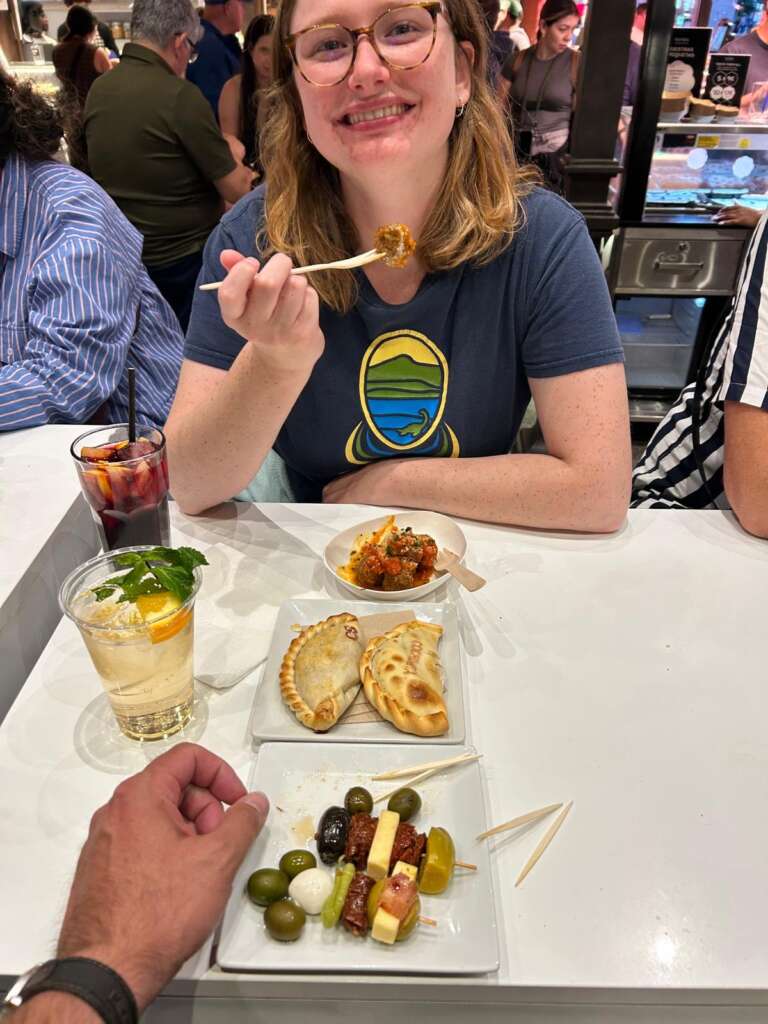
The Spanish firmly believe that food is meant to be both enjoyed and shared. Even the act of tapas encourages people to share food and to try new things. It makes food a social activity. The long lunch does the same. I’m always touched by how many parents are waiting for their kids at 1 when my school lets out for lunch. The teachers who live nearby also go home, and it’s nice to see parents walking their kids back to school at three. It strikes me as such an excellent opportunity for family time and for parents to check in on their kids. Especially since my school is from 9 to 5 and I know many of my students and their siblings have activities they do outside of school, I love that they have that time with their families that isn’t rushed, and food provides that opportunity. The Spanish even have a word, ‘sobremesa’, for when you and your family and friends are relaxing after a meal. That period of rest and conversation is so important that it gets its own word, and there is no English equivalent.
Now I, of course, don’t go home for lunch, but even for those of us who stay, no one works while eating, and the teachers get excited when I try a new Spanish food. If you come to Spain, the people are going to ask you about your favorite food, and your coworkers are going to be excited to introduce you to traditional Spanish dishes (my favorites have been cocido and bizcocho). In doing so, they are inviting you to join their community and to share something important with them. So when in doubt, try the food.
Author: Mary W.