

Walking into a classroom full of very small children as a Language Assistant can be the most rewarding experience, but also daunting. Before you’ve even said «hello», someone is crying, someone else is crawling under a table, and another child is waving at you like a celebrity. You can be smiling on the outside, but inside you’re thinking, «How can I begin to control this situation?»
No one really prepares you for how intense infantil and young Primaria classes can be. The kids are so sweet and full of energy – but they also have a very short attention span and absolutely no filter. You may have the best activity planned, only for it to fall apart in minutes. And since you’re not the main teacher, it’s hard to know how strict you’re allowed to be or when to step in.
This post is about finding some ways to make the harder days a little more exciting and to eventually enjoy them.
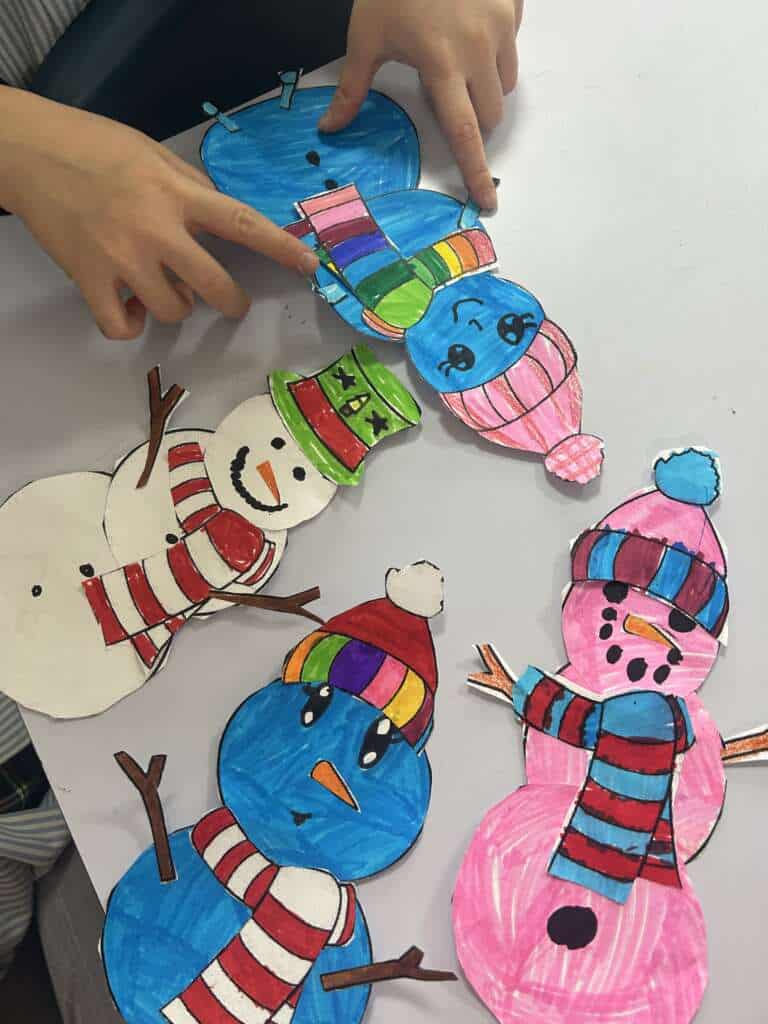
1. Simple, Repetitive Classroom Routines
Young kids thrive on predictability. Start your lesson the same way every time: a hello song, sitting on the carpet or a simple question like ‘How are you today?’. When they know what comes next, they tend to be calmer and easier to manage. What works best for me is gathering the children on the carpet and going over the same daily questions together, such as what day it is today, what day it was yesterday, what day it will be tomorrow, as well as what the weather is like, what the date is, and which classmates are at home or at school. This usually makes the beginning of the class start with a lot more ease, as they know what to expect and they know what I expect as soon as I walk through the door.
Of course, every day is different, and some things don’t go to plan. In this instance, I clap twice, and they know to repeat it with two claps, and we keep going until everyone is clapping together.
Even something as small as clapping with a rhythm for them to copy can signal ‘it’s time to listen’.
2. You’re Under Arrest
This is a playful discipline trick that works best with Infantil and 1st and 2nd of Primaria. It turns misbehaviour into a game instead of a confrontation.
Instead of raising your voice or telling the kids off, you pretend to be a police officer or a ‘classroom boss’ and ‘arrest’ bad behaviour in a fun way.
‘Oh no.. I can see talking whilst I’m speaking’
‘Stop! You’re under arrest’
‘Hands on your head. Freeze!’
The child usually laughs, freezes and immediately stops – because they’re surprised and engaged, but not embarrassed.
The younger children usually respond to play and not lectures, which avoids shouting or any negativity in the classroom whilst redirecting behaviour without shaming. It gives you a sense of authority without being scary.
From the first day I started using this, I realised that with the younger children, controlling the classroom, doesn’t always mean being louder or tougher, it just means being a little more playful.
3. The Magic Teacher Voice
You can spend as long as you want telling the kids to sit down and listen. But especially if you are in the position of having the class at 9:00 am or after lunch time, you’ll quickly realise that it is a lot more difficult than you assume. I spent my first few classes repeating myself and repeating myself, but then decided to try, ‘if you can hear me, touch your nose’. Surprisingly, the kids started to copy me. The room slowly calmed down as they focused on the ‘magic whisper voice’. Since then, I’ve learned that with little kids, whispering is often more powerful than shouting.
The thing I love the most about it is that the kids feel like they’re in on a secret, and they want to pay attention so they don’t miss what comes next. When the class gets too loud, I’ll not fight it, I’ll lower my voice, give a quiet instruction and wait. And most of the time, they settle before I even finish the second instruction.
4. Simon Says
Simon Says quickly became one of my favourite ways to regain control of the room – especially when everyone is out of their seats, we’re finishing a task, and things start to spiral. With the younger kids, telling them to do something repeatedly rarely works. But turning it into a game that gets their attention immediately. These kids are so competitive at that age that they can’t stand the thought of losing a game to their classmates.
The reason I love the method of using a game to calm a classroom is that the kids don’t feel like it’s management to them. It feels like playtime. The kids are laughing, concentrating and following the exact same instructions you struggled to get them to listen to before, but this time they are actually competing to do it the best.
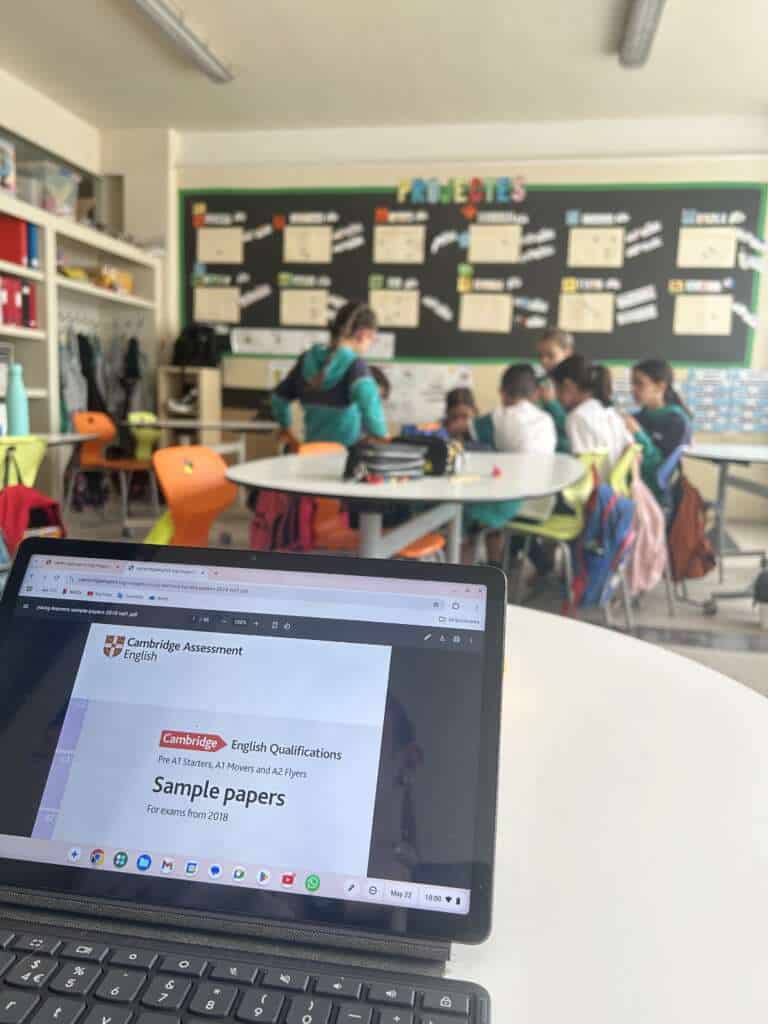
5. ‘Star Student’ Surprise
Instead of always calling out the bad behaviour, it works to also notice the good behaviour among the bad and praise them in front of the other kids.
‘Wow, I love how Maria is sitting so nicely’
‘I love it, Alex – fantastic listening’
Again, carrying on from the point before, kids at this age are so competitive that they can’t stand the thought of someone else doing something better than them. So as soon as they hear someone else is being praised, they know they want to be in that position too.
Everyone wants to be the ‘star student’.
Most of the time, it is better to praise what is right and to get others to follow along than to continuously focus on what’s going wrong.
Looking back to the start of my time as a Language Assistant, I’ve learned that finding your authority in the classroom doesn’t mean becoming stricter or trying to control every moment. It’s about building trust, being consistent, and meeting young learners at their level. Some days will still be chaotic, and not every activity will go to plan — but that’s okay. With a bit of patience and confidence in your own style, the classroom slowly starts to feel like your space, too. And once that happens, those overwhelming moments turn into some of the most rewarding parts of being a Language Assistant.
Author: Ellen F.